Recalling 1848: Fontane's Memoirs and the Fight for Democracy
The year 1848 stands as a watershed moment in European history, a period when the collective yearning for freedom and self-determination erupted in a series of revolutionary upheavals across the continent. From Paris to Palermo, Vienna to Berlin, citizens rose against entrenched monarchies and autocratic rule, demanding constitutional reforms, democratic representation, and an end to social injustice. To truly understand these transformative events, it's vital to "revolution 1848 erinnern" – to recall, reflect, and learn from the triumphs and travails of those who fought for a more just society. Among the myriad voices that chronicle this tumultuous era, that of the acclaimed German writer Theodor Fontane offers a particularly fascinating, if at times self-serving, glimpse into the heart of the Berlin March Revolution. His personal recollections, penned decades later, highlight not only the raw energy of the uprising but also the complex, often subjective, nature of historical memory.
The Echoes of 1848: A Continent in Turmoil
The European landscape leading up to 1848 was a tinderbox of social and political discontent. The so-called "Vormärz" period in states like Austria and Prussia was characterized by rigid absolutism, widespread poverty, and a burgeoning sense of national and liberal consciousness. Economic hardship, fueled by crop failures and industrializing economies that created new social disparities, pushed masses to the brink. In Vienna, for instance, chronic mismanagement and harsh police state measures stifled any glimmer of political freedom. Then, like a spark igniting dry kindling, news of the February Revolution in Paris reached other European capitals. This wasn't merely an intellectual awakening; it was a societal explosion driven by deep-seated social grievances and an undeniable desire for popular sovereignty.
Students often found themselves at the forefront of these movements, embodying the idealism and fervor of the revolutionary spirit. In Vienna, figures like Hans Kudlich championed initiatives for fundamental land reform, their legacy still honored today. The fight was fundamentally for political freedom, for a constitution, and for the promise of democracy. These intertwined demands, born out of stark economic realities and a rejection of authoritarianism, underscore the universal appeal of the 1848 revolutions. They were truly a people's revolution, for the people, aiming to reshape the very foundations of governance. For a deeper dive into the broader context of these uprisings, consider exploring
Revolutions: Social Unrest Ignites a Fight for Freedom.
Theodor Fontane's 1848: Between Barricades and Memoir
Against this backdrop of continent-wide upheaval, a young Theodor Fontane, then a pharmacist and aspiring writer, found himself in Berlin as the March Revolution erupted. His experiences, detailed in his memoir
Von Zwanzig bis Dreißig (covering the years 1840-1850), provide a captivating, albeit often romanticized, account of his involvement. Published posthumously in 1898, the memoir presents a vivid picture of a man caught in the throes of history. Yet, modern scholarship, notably the 2015 extensively commented new edition from the
Große Brandenburger Ausgabe, reveals a fascinating discrepancy between the youthful Fontane's actions and the grand narrative crafted by the elder statesman of German literature.
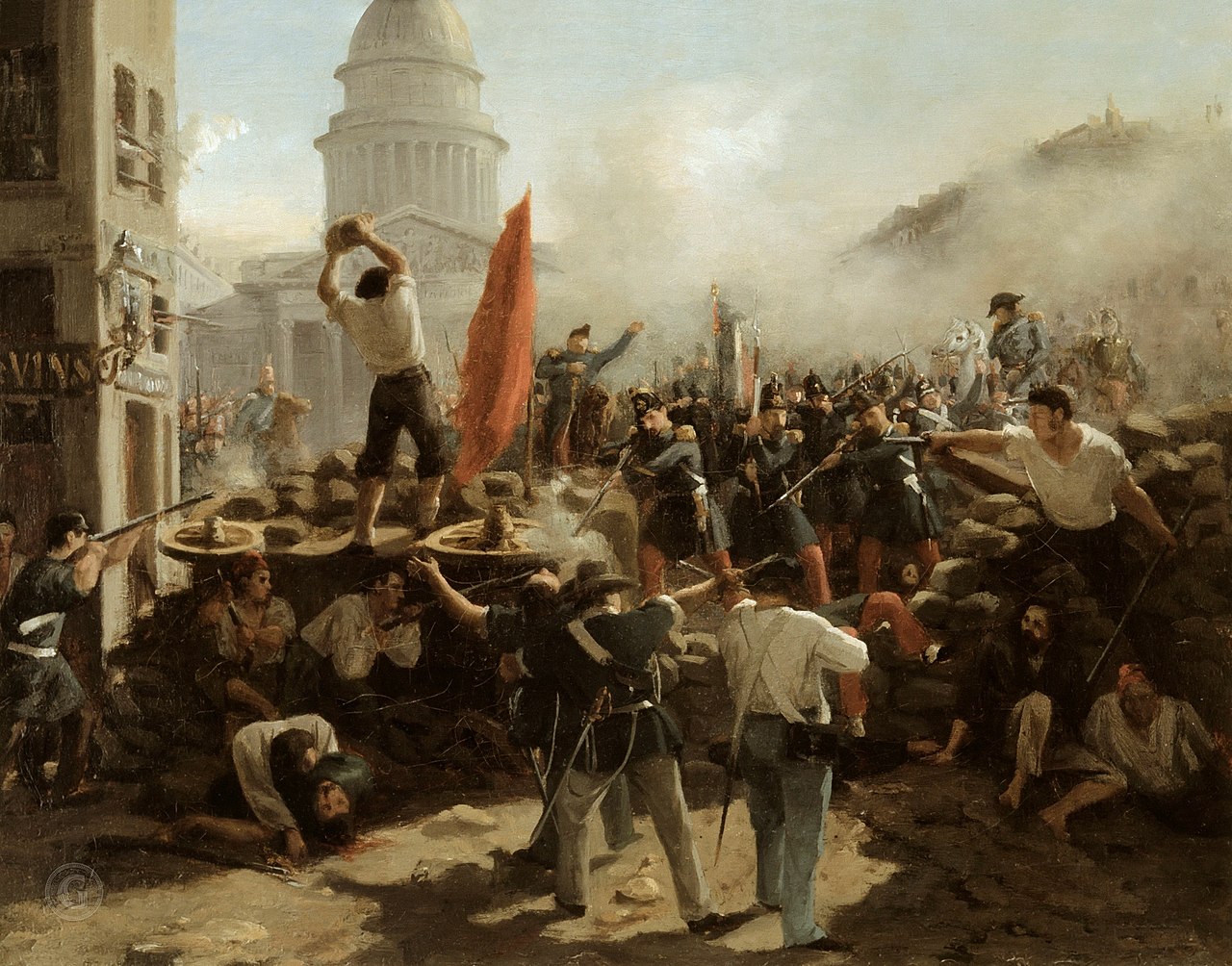
Fontane's memoir places him right at the heart of the dramatic events of March 18th, 1848, witnessing the popular uprising near his central Berlin pharmacy, between the Stadtschloss and Alexanderplatz. He recounts his attempt to "storm-ring" the bells of the nearby Georgenkirche – a revolutionary custom – only to find the church doors locked ("Protestant churches are always closed," he quipped). Perhaps the most memorable anecdote involves him acquiring a carbine during the looting of the Königstädter Theater's props department. Armed with this rusty weapon, he marched towards the barricades, only to be thwarted by his inability to load gunpowder into the antiquated firearm. "Sheepishly, I retreated from the street and went to my room," he writes, acknowledging the shattered glass around his bed as a stark reminder that "when the guns go off, you never know how the bullets will fly." This self-deprecating portrayal suggests a man more of a "feuilletonistic observer" than a true revolutionary combatant. For a focused look at how his role evolved in his memory, read
Theodor Fontane's 1848 Revolution: Reimagining His Role.
The Shifting Sands of Memory: Why Fontane's Account Matters
The true value of Fontane's memoir, especially when viewed through the lens of critical commentary, lies in what it reveals about the construction of historical memory. The new edition's detailed annotations, spanning over 330 pages, highlight how Fontane largely tells "his" story of the revolution from the perspective of failure, almost as if his personal mishap with the carbine on March 18th foreshadowed the ultimate failure of the revolution nine months later. What we learn about the young Fontane's actual feelings, opinions, and deeds at the time remains largely elusive, hidden beneath layers of retrospective narrative.
This becomes particularly evident in the carbine incident. In his autobiography, Fontane emphasizes solely the "failure function of the weapon and its bearer." Yet, nearly fifty years later, in a letter, the same scene acquires a dramatically different meaning: "Today, 47 years ago, I celebrated the victory of the revolution with a carbine in my hand... to fight for freedom with it." This striking contradiction underscores the human tendency to craft, and often embellish, personal narratives, particularly when looking back at pivotal historical moments. Why would he do this? Perhaps to align his younger self with the more heroic, freedom-fighting image expected of a celebrated literary figure. It's a powerful reminder that autobiographical accounts, while invaluable, must always be critically engaged with, understanding that personal perspectives can shift and evolve over time, influenced by present circumstances and desired legacies. When we "revolution 1848 erinnern," we're often contending with these layered and sometimes contradictory accounts.
Enduring Legacy: Why We Still Need to Remember 1848
Despite, or perhaps because of, the complexities of historical accounts like Fontane's, the importance of continuing to "revolution 1848 erinnern" cannot be overstated. The fight for democracy, for political freedom, and for social justice that characterized these uprisings remains a continuous struggle in many parts of the world. The 1848 revolutions, even in their ultimate failure to immediately establish lasting democratic states, planted vital seeds for future movements and laid the groundwork for modern constitutionalism and parliamentary systems. They underscored the power of the people when united by common grievances and aspirations.
Remembering 1848 isn't just about recalling historical facts; it's about understanding the deep-seated human desire for self-determination and dignity. It's about recognizing the critical role of civil society, student movements, and ordinary citizens in demanding change. By revisiting these events, we gain insights into the fragility of democratic gains, the persistent challenges of social inequality, and the enduring relevance of active participation in shaping one's own destiny. Fontane's story, in particular, offers a nuanced lesson: individual roles within grand historical narratives are often more complex and less clear-cut than they appear in hindsight, reminding us to approach history with a critical eye and an appreciation for its many dimensions.
In recalling 1848, we connect with a legacy of aspiration and resilience. We see how the struggle for freedom can be both grand and intimately personal, heroic and comically flawed. The lessons learned from the barricades of Berlin and the student protests of Vienna continue to resonate, urging us to defend and extend the democratic ideals that were so passionately fought for over a century and a half ago.