The Echoes of Change: Why We Must Remember the Revolutions of 1848
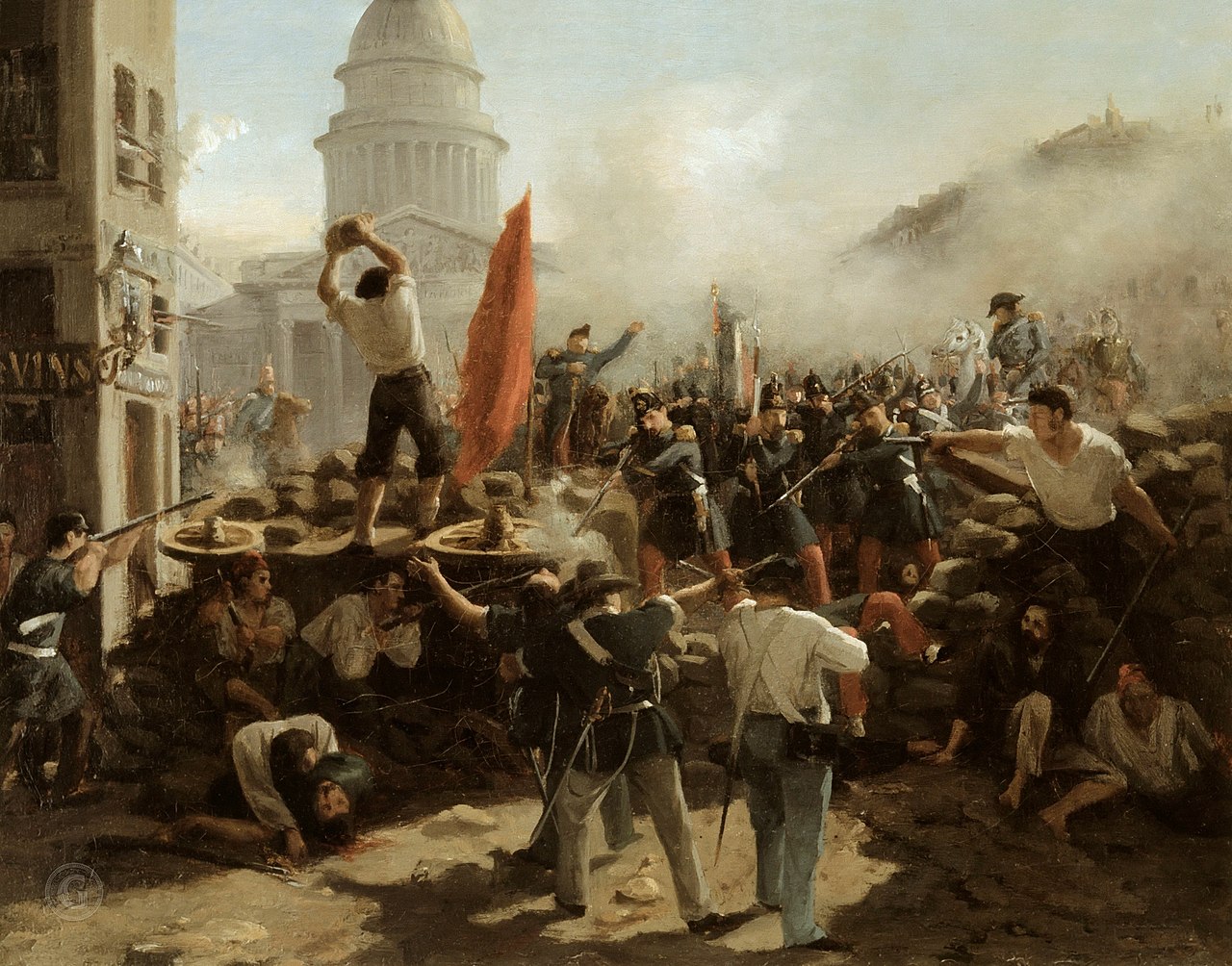
The year 1848 stands as a pivotal moment in European history, a period when long-simmering social unrest ignited a continent-wide fight for freedom, democracy, and national unity. From the bustling streets of Paris to the imperial capitals of Vienna and Berlin, ordinary citizens rose up against entrenched absolutist regimes, demanding fundamental rights and a voice in their own governance. These widespread uprisings, collectively known as the Spring of Nations, were a complex tapestry of idealism, sacrifice, and ultimately, frustrated ambition. Understanding their origins, events, and enduring legacy is crucial for appreciating the ongoing evolution of democratic ideals and social justice. This article delves into the causes and key narratives of 1848, exploring why it's so important to
revolution 1848 erinnern – to remember and learn from these profound historical moments.
The Powder Keg of Europe: Unrest Before 1848
The decades leading up to 1848, often referred to as the *Vormärz* (pre-March) period, were characterized by a profound sense of discontent across Central Europe. While outward signs of stability might have suggested otherwise, beneath the surface, a volatile mix of economic hardship, political repression, and burgeoning nationalist and liberal ideals was brewing. Widespread agricultural failures, poor harvests, and economic mismanagement had led to rampant poverty, famine, and destitution, particularly among the lower classes. Many faced starvation and severe deprivation, their plight exacerbated by rapid industrialization that displaced traditional livelihoods without offering adequate new ones.
Politically, the prevailing system was absolutism, largely upheld by figures like Austria's Prince Metternich, who championed a strict police state designed to quash any liberal or democratic aspirations. Freedom of speech, assembly, and the press were severely restricted, and political dissent was met with swift and brutal suppression. This era lacked any real political freedom, leaving the populace feeling disenfranchised and powerless. When news of the February Revolution in Paris – which successfully overthrew the monarchy and established the Second Republic – reached other European capitals, it acted as a potent spark. It wasn't primarily intellectual debates that ignited the masses, but rather the desperate social and economic conditions, coupled with the inspiring notion that change was possible. The cry for a better life resonated far more deeply than any abstract philosophical argument.
Barricades and Biographies: Theodor Fontane's 1848 in Berlin
Among the myriad stories of 1848, the personal account of a young Theodor Fontane in Berlin offers a fascinating, if sometimes self-serving, glimpse into the chaos and confusion of the time. The budding pharmacist and future literary giant, renowned for works like "Effi Briest," later meticulously chronicled his experiences in his memoirs, "Von Zwanzig bis Dreißig." However, as extensive new editions and commentaries reveal, Fontane's recollections of his role in the Berlin March Revolution of 1848 were not always entirely accurate, often embellished in old age to craft a more heroic narrative.
Fontane found himself in the immediate vicinity of the dramatic popular uprising on March 18, 1848, near his pharmacy in central Berlin. His memoir paints a vivid picture: attempting to ring the bells of the nearby Georgenkirche, only to find it locked – a poignant, almost comical symbol of institutional inertia in the face of burgeoning revolution. The events spiraled, leading to the storming and looting of the Königstädter Theater, where Fontane managed to acquire a carbine. Inspired, he rushed towards the barricades, ready to join the fight for freedom. Yet, his revolutionary fervor was short-lived; the rusty carbine proved impossible to load, forcing him to retreat "sheepishly" to his room, where shattered glass around his bed served as a stark reminder of the danger.
Fontane's narrative, particularly the episode with the faulty carbine, often tells the story of the revolution from a "perspective of failure." His personal `malheur` (misfortune) on March 18th seems to foreshadow the ultimate failure of the broader revolution nine months later. What's particularly revealing is the contrast between his memoirs, which emphasize the "failure function of the weapon and its bearer," and a letter written almost 50 years later, where he romanticized the event, claiming he celebrated the revolution's victory with a carbine in hand, "to fight for freedom." This highlights how memory can be reshaped by subsequent success and perspective. For a deeper dive into his reimagined role, consider reading
Theodor Fontane's 1848 Revolution: Reimagining His Role.
The People's Uprising: Vienna's Fight for Democracy
While Berlin had its own dramatic events, the Vienna Revolution of 1848 truly embodied the spirit of a revolution "of the people and for the people." Like Berlin, it was fueled by profound social and economic distress, but also by a more explicit and unified demand for political freedom and democracy. Students played a particularly prominent role, acting as crucial agitators and organizers, articulating the grievances of the wider populace.
One such student, Hans Kudlich, became a figurehead for agrarian reform, initiating a proposal for the emancipation of serfs and the abolition of feudal obligations – a concept known as *Grundentlastung*. This focus on tangible, socio-economic reform, alongside demands for constitutional government and civil liberties, underscored the practical and profound nature of the Viennese uprising. Kudlich's legacy is still remembered today, with numerous memorials and the annual Kudlich Prize serving to `revolution 1848 erinnern` and honor his contributions to social justice. The Viennese revolution, though ultimately suppressed, showcased the collective will of a populace striving for a more equitable and democratic society. It underlined that the fight for freedom wasn't just an intellectual pursuit but a visceral response to decades of oppression and neglect.
Legacy and Lessons: Why We Must Revolution 1848 Erinnern
Though many of the immediate goals of the 1848 Revolutions were not fully realized, and most movements were eventually suppressed by reactionary forces, their impact reverberated throughout the 19th and 20th centuries. These uprisings demonstrated the undeniable power of collective action and the deep-seated human desire for self-determination. They shattered the illusion of absolute monarchical invincibility and laid the groundwork for future democratic reforms, national unification movements, and the establishment of basic civil liberties.
Understanding 1848 offers invaluable lessons for contemporary society:
- The Power of the People: Even in the face of overwhelming state power, widespread popular discontent can force change.
- The Complexity of Revolution: Revolutions are rarely singular events; they involve diverse actors, conflicting ideologies, and unpredictable outcomes. Fontane's personal story, a mix of idealism and clumsy reality, highlights this complexity.
- Memory vs. History: Historical narratives are often shaped and reshaped by those who tell them. Critical engagement with primary and secondary sources is essential to uncover the full picture, as seen in the contrasting accounts of Fontane's carbine incident.
- Enduring Ideals: The core demands for political freedom, democracy, social justice, and national self-determination raised in 1848 remain relevant in struggles around the world today.
To truly `revolution 1848 erinnern` is to engage with these complex layers – the heroism and the tragedy, the grand ideals and the personal failures, the immediate setbacks and the long-term historical impact. It means recognizing that the fight for freedom is a continuous process, often taking generations to bear fruit. For further insights into how these pivotal events shaped the literary world and beyond, explore
Recalling 1848: Fontane's Memoirs and the Fight for Democracy.
The Revolutions of 1848 were a testament to the human spirit's resilience and its unyielding quest for fundamental rights. While the immediate outcome was largely one of failure for the revolutionaries, their legacy is undeniable. They irrevocably altered the course of European history, planting seeds of democracy and social justice that would eventually blossom. By delving into the narratives of these turbulent times, from the personal accounts of figures like Theodor Fontane to the collective struggles of the Viennese populace, we gain a deeper appreciation for the sacrifices made and the enduring lessons learned in the pursuit of a more just and free world.