The Myth of the Barricade Fighter: Theodor Fontane's 1848
The year 1848 echoes through European history as a time of immense social and political upheaval, a year when popular uprisings challenged established monarchies and demanded greater freedoms. In Prussia, the Berliner Märzrevolution (Berlin March Revolution) was a pivotal moment, and among its many participants and observers was a young apothecary and aspiring writer named Theodor Fontane. Decades later, as a revered literary figure, Fontane would recount his experiences in his memoirs, "Von Zwanzig bis Dreißig" (From Twenty to Thirty), covering the years 1840-1850. Yet, as recent scholarship reveals, the grand narrative of his revolutionary involvement that he presented in old age might have been more a product of literary crafting than historical fact.
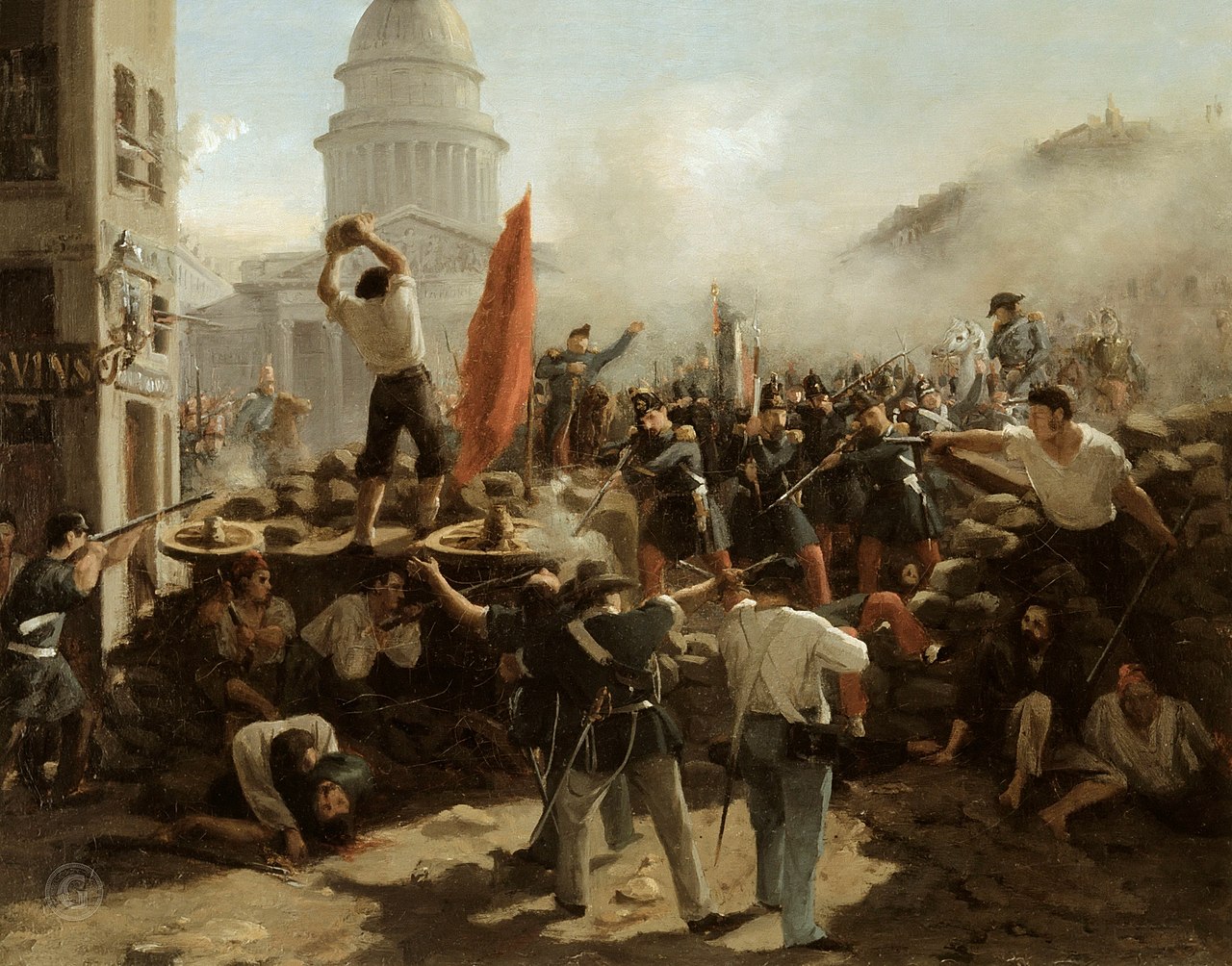
For a long time, the image persisted of Theodor Fontane, carbine in hand, bravely heading towards the barricades on Berlin's Alexanderplatz. This dramatic depiction painted him as an active revolutionary, a man of action standing shoulder-to-shoulder with the people fighting for liberty. His own recollections fostered this image, suggesting a direct, albeit perhaps clumsy, participation. This romantic self-stylization, carefully cultivated over the years, served to position the future author of "Effi Briest" not merely as a chronicler of his times, but as a direct participant in one of its most defining moments. How, then, do we truly
revolution 1848 erinnern – remember – Fontane's role, and separate the legend from the lived experience?
Unveiling the Truth: Scholarly Insights into Fontane's 1848 Experiences
The most comprehensive and meticulously annotated new edition of Fontane's memoirs, published in 2015 as part of the "Große Brandenburger Ausgabe" (Great Brandenburg Edition), finally laid bare the discrepancies between Fontane's later recollections and the likely events of 1848. This scholarly work, edited by Gabriele Radecke and Heinrich Detering, with detailed commentaries by Wolfgang Rasch, marked the first time since its original publication (and Fontane's death) in 1898 that the text was presented in its historical context, stripped of later embellishments.
The picture that emerges is far more nuanced. Fontane, then an apothecary with a nascent literary interest, was indeed a witness to the dramatic events of March 18, 1848, particularly in the vicinity of his central Berlin pharmacy, between the Stadtschloss and Alexanderplatz. He observed the popular uprising unfold, experiencing the chaos and violence first-hand. One vivid detail from his account describes his attempt to "storm the bells" at the nearby Georgenkirche – a customary revolutionary act – only to find the Protestant church locked: "Protestant churches are always locked," he wryly noted. This detail, while humorous, already hints at a certain distance from direct action.
Perhaps the most iconic, and subsequently debunked, element of his story concerns the carbine. Fontane claimed to have acquired a carbine during the looting of the Königstädter Theater. Armed with this weapon, he reportedly ran towards the barricades, only to be foiled by the rusted gun, unable to even load the gunpowder. "Humbly, I retreated from the street and went to my room," he wrote, where shards of glass lay around his bed, acknowledging the real danger: "When the guns first go off, you never know how the bullets fly." While the streets outside raged with fierce fighting and numerous casualties, Fontane appears to have withdrawn.
The editors' extensive commentaries, spanning over 330 pages, highlight that Fontane primarily recounts "his" story of the revolution from the perspective of failure. His personal mishap with the carbine on March 18th, they argue, almost seems to foreshadow the ultimate failure of the broader revolution nine months later. Crucially, these commentaries reveal that "we learn almost nothing of the young Fontane's real feelings, opinions, and actions at the time."
The contradiction is stark. In his autobiography, written closer to the events, Fontane focuses exclusively on the "failure of the weapon and its bearer." Yet, in a letter written almost 50 years later, the scene takes on a different hue: "Today, 47 years ago, I celebrated the victory of the revolution with a carbine in hand... to fight for freedom." This later statement, crafted in the twilight of his life, reimagines his role, transforming a hesitant observer into a freedom fighter – albeit one "only generally" for freedom, as contemporary accounts after his death also suggested he was "not at all an insurgent." This forensic approach to Fontane's narrative helps us more accurately
revolution 1848 erinnern the realities of the Berlin uprising, beyond the embellishments of a literary master.
The Broader Canvas: 1848 Revolutions Beyond Berlin
While Fontane's personal narrative unfolds against the backdrop of Berlin, it’s crucial to remember that 1848 was a pan-European phenomenon. The unrest in Berlin was just one facet of a widespread wave of revolutions that swept across the continent, from Paris to Vienna, Budapest to Palermo. These movements, often dubbed the "Springtime of Peoples," were ignited by a potent mix of economic hardship, social inequality, and a yearning for political liberalisation.
In the years leading up to 1848, known as the *Vormärz* (pre-March) era, discontent was simmering. Crop failures, economic mismanagement, widespread poverty, and the suffocating grip of absolutist regimes fueled public frustration. The lack of political freedoms, coupled with the ubiquitous presence of a police state, created an unbearable atmosphere for many. When news of the February Revolution in Paris reached other European capitals, it acted as a potent spark, igniting already volatile situations.
The Viennese Revolution of 1848, for instance, perfectly exemplifies these dynamics. It was a revolution "of the people and for the people," driven by a profound desire for political freedom and democracy. While intellectual currents played a role, it was primarily the dire social conditions that mobilised the masses. Students, in particular, emerged as key actors, often at the forefront of the protests. Figures like Hans Kudlich, whose initiative led to the abolition of feudal obligations (Grundentlastung), are still remembered today with numerous memorials and the annual Kudlich Prize. When we
revolution 1848 erinnern across Europe, we recall not just the iconic figures but also the collective will of ordinary citizens, students, and workers who dared to challenge the status quo. Fontane's account, even with its personal focus, is therefore a small but significant piece of this much larger, complex historical tapestry. For more on the causes and widespread impact of these movements, explore
Revolutions: Social Unrest Ignites a Fight for Freedom.
Why Fontane's Reimagined Role Matters Today
The scrutiny of Theodor Fontane's 1848 narrative offers invaluable insights, not just into the life of a literary giant, but into the very nature of memory, autobiography, and historical interpretation. Why would Fontane, a celebrated author, choose to embellish or even revise his role in such a significant historical event?
One explanation lies in the human tendency to shape one's past to fit a present narrative or desired legacy. As a celebrated author writing in his later years, Fontane may have wished to cast himself in a more heroic or actively engaged role, aligning with the ideals of a nation grappling with its own identity. His youthful reticence might have seemed less fitting for the grand literary figure he had become. This phenomenon teaches us a critical lesson: autobiographical accounts, while offering unique perspectives, are inherently subjective and often serve to construct a particular self-image.
Understanding Fontane's actual (or likely) involvement versus his later portrayal encourages us to approach historical sources, especially personal memoirs, with a critical eye. It highlights the importance of rigorous scholarship, like the 2015 edition of "Von Zwanzig bis Dreißig," which meticulously cross-references, contextualises, and analyses primary texts to arrive at a more accurate understanding. This is not about diminishing Fontane's literary genius, but about appreciating the complexity of historical truth and the process by which narratives are formed and sometimes altered over time.
For anyone interested in history or literature, Fontane's case is a fascinating study in how individuals interact with and later interpret momentous events. It's a practical reminder to question assumptions, seek corroborating evidence, and consider the context in which a story is told. His story, in all its revised glory, still contributes to how we
revolution 1848 erinnern, offering a unique personal lens on a transformative period. For a deeper dive into his memoirs and their historical context, consider
Recalling 1848: Fontane's Memoirs and the Fight for Democracy.
In conclusion, Theodor Fontane's engagement with the 1848 Revolution, particularly the Berlin March events, is a complex interplay of personal experience, literary ambition, and historical revision. While he might not have been the fearless barricade fighter his later accounts suggested, his presence as a keen observer and his subsequent struggle to reconcile his lived reality with a more heroic narrative offer profound lessons. His story invites us to critically
revolution 1848 erinnern, to appreciate the meticulous work of historians, and to understand that the past is often a nuanced tapestry, woven from both fact and the fascinating, ever-changing threads of memory and self-representation.